
How Can We Help?
Sound Mind for a Shared Experience (Episode 20260902)
Mah jongg is increasingly being paired with alcohol and other mind-altering substances as part of the social experience. Cocktail-themed events are common, and marijuana-themed events have begun appearing as well. For some venues, beverage sales may even be part of the business model that enables them to host mah jongg.
What adults choose to consume is their decision. But when you are responsible for instruction or another structured mah jongg experience, an individual’s impairment can quickly become a shared problem.
Mah jongg requires attention, memory, judgment, pattern recognition, and awareness of what is happening at the table. Learning the game requires even more concentration. When a participant becomes impaired, they may require repeated instruction, lose track of procedures, become disruptive, or consume a disproportionate amount of your attention. Eventually, their experience begins affecting everyone else’s.
Your responsibility as an instructor is not to police people’s personal choices. It is to protect the experience you promised.
Manage expectations before you have to manage behavior.
- Have you ever taught or hosted an event where someone’s alcohol or substance use affected your ability to teach or the experience of other participants? What happened?
- If a venue profits from alcohol sales but you are responsible for the learning experience, where does responsibility for establishing boundaries belong?
- At what point does someone’s personal choice become an instructor’s concern during a shared learning experience?
Talking Points
Protect the Promise
When people register for instruction, you have made a promise about what they will receive. Protecting that promise includes creating conditions in which participants can reasonably learn.
The issue isn’t whether someone enjoys a cocktail or uses another legal substance. The issue is impairment.
One participant who repeatedly needs concepts explained because of their impairment can redirect your attention away from everyone else. Allowing that to continue isn’t simply accommodating one learner; it changes the experience for the entire group.
Establish the Expectation Beforehand
A boundary communicated before an event feels very different from one introduced after a problem occurs.
Include your expectation in the event description, registration information, confirmation email, or other pre-event communication.
Sound-Mind Policy: To provide a focused, enjoyable experience for everyone, participants are expected to remain of sound mind throughout this event. Alcohol, marijuana, and other mind-altering or intoxicating substances are not permitted during instruction or play. We appreciate your help in creating an environment where everyone can learn, participate, and enjoy the game.
The objective is clarity, not judgment. Participants know what kind of environment they are registering for before they arrive.
Align With the Venue
Restaurants, bars, breweries, country clubs, and other hospitality venues can be valuable partners. Often, the venue provides space with the expectation that participants purchase food and beverages.
Discuss your Sound-Mind Policy before agreeing to the engagement.
Venue Expectation: [Venue] welcomes us to use their space with the expectation that participants support the establishment through food and beverage purchases. We encourage everyone to enjoy a meal and non-alcoholic beverages during our event. Our Sound-Mind Policy remains in effect throughout instruction and play.
Another option is to separate the experiences: learn and play first; imbibe afterward.
That protects the structured learning environment while still allowing participants to enjoy the venue’s social experience after instruction concludes.
Reset an Expectation When Experience Reveals the Need
Sometimes you don’t know you need a boundary until someone crosses one.
If substance use has already begun interfering with a lesson series, establish the expectation before the next session rather than continuing to manage the behavior individually.
Communicate the change to everyone without identifying the people whose behavior prompted it: “When we began this series, I promised to give everyone the opportunity to build a solid foundation in mah jongg. After our first sessions, I realized that I need to make one adjustment to help me deliver on that promise. Going forward, our lessons and play will be substance-free. Please enjoy the food and non-alcoholic beverages offered by [Venue], and save alcoholic or other mind-altering substances for after our session concludes. Thank you for helping me create an environment where everyone can stay focused, participate fully, and get the most from our time together.”
Speak with the venue first so participants don’t receive conflicting expectations.
When you couldn’t manage the expectation beforehand, reset it before the behavior becomes the expectation.
Know What You Will Do When the Policy Is Tested
A policy isn’t useful if you haven’t decided what happens when someone doesn’t follow it.
If someone arrives impaired or becomes impaired during the event, repeatedly compensating for that participant isn’t fair to the other learners.
Address the participant privately. Depending on the circumstances and your agreement with the venue, the appropriate response might be asking them to stop participating in instruction, observe rather than play, or leave the structured portion of the event.
The goal isn’t punishment. It is protecting the experience promised to everyone who came to learn.
Activity
Build Your Sound-Mind Expectations
A clear expectation is easier to communicate—and much easier to uphold—when you have thought through it before you need it.
In this activity, you will develop a Sound-Mind Policy for one of your instructional or structured mah jongg experiences. You will define the experience you are promising, identify where substance use could interfere with that promise, establish expectations for participants and the venue, and decide how you will respond if the policy is tested.
What You’ll Need
Download the Sound Mind for a Shared Experience Worksheet and work through each section using one of your current or planned events.
You can also download an example to see how another instructor might approach the same decisions. Use it as a model for the thought process, not a policy you need to copy. Your expectations should reflect your event, venue, participants, and teaching environment.
Work Through the Worksheet
Begin with the experience rather than the policy. Then work through the worksheet to:
- Define the promise. Identify what participants should reasonably expect from the experience.
- Identify the pressure points. Consider the venue, availability of alcohol or other mind-altering substances, marketing, and other circumstances that could conflict with the learning environment.
- Set the expectation. Draft language that tells participants what is expected, why it matters, and when the expectation applies.
- Plan the response. Decide what you will do if someone arrives impaired or becomes impaired during the event.
- Prepare for a reset. Draft how you would introduce the expectation if a series were already underway and experience revealed the need for a new boundary.
When you finish, you should have more than a policy. You should have a plan for communicating it, aligning it with your venue, and responding consistently when the expectation is tested.
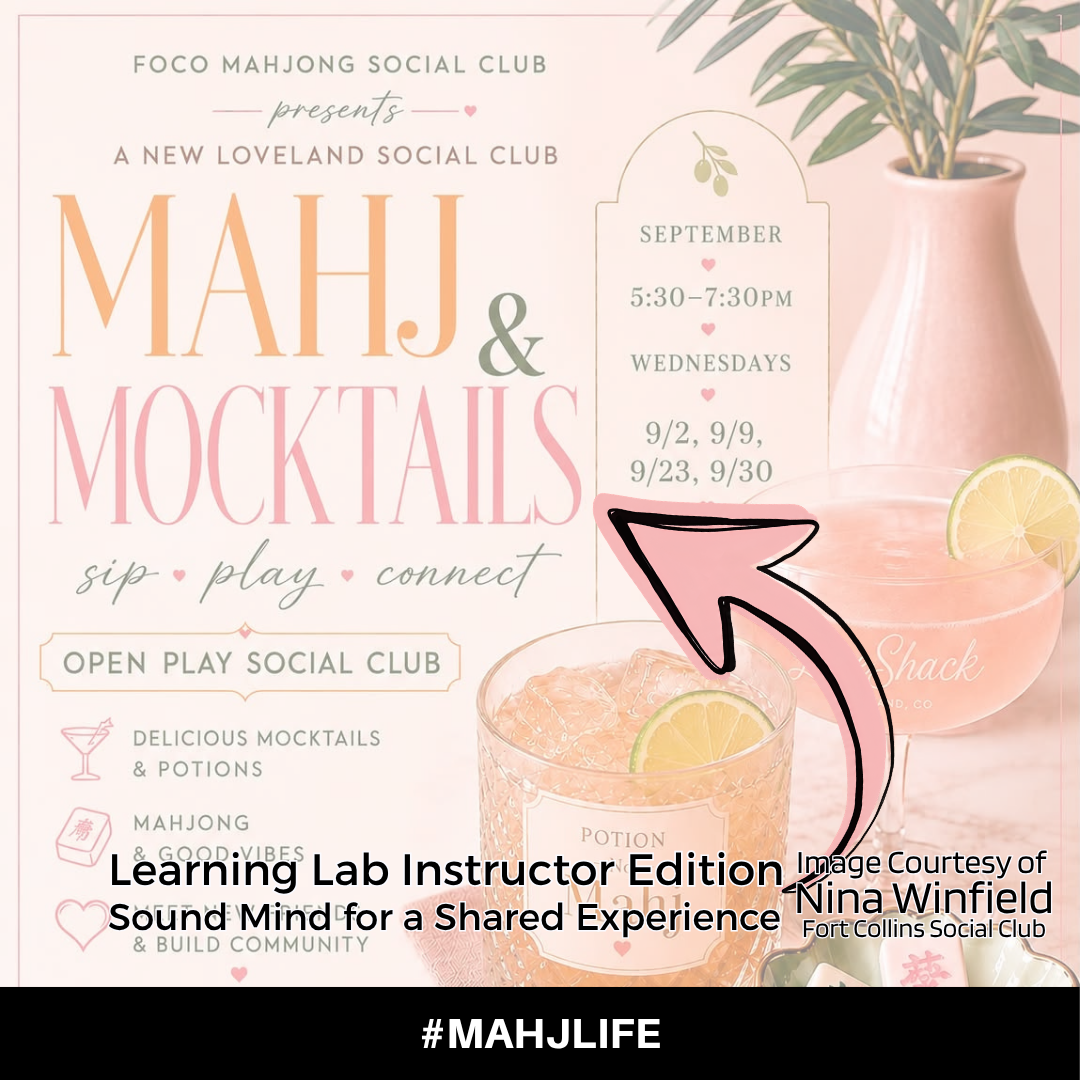
Image Courtesy of Nina Winfield of Fort Collins Social Club
Reflections
- What experience are you promising participants, and what boundaries are necessary for you to deliver it?
- Where could the expectations of a venue, host, or participant conflict with your responsibility as the instructor?
- What expectation can you communicate now so you don’t have to manage the behavior later?
You don’t need to control what adults choose to do. You do need to decide what is compatible with the experience you are responsible for providing.
Manage expectations before you have to manage behavior.