
How Can We Help?
WHY WAIT PATTERNS MATTER (ARTICLE 225)
When a player is close to winning (e.g., three away with 50 tiles remaining), they are usually in the phase of the game where risk naturally increases. At that point, every pick and discard carries weight, and there is rarely a “safe” choice. The decision is not simply whether to defend against opponents or preserve your hand, but how much risk you are willing to accept given your position.
This is where push-fold judgment comes into play. A player must assess their realistic potential to win, the strength and visibility of opponents’ exposures, what has already been discarded, and how vulnerable their own wait may be. Breaking up your hand may reduce immediate danger, but can quietly eliminate your chance to win. Pushing forward may preserve your winning potential, but it increases the chance of feeding an opponent.
There is no universally correct answer. The impact of the next discard depends on context—table information, timing, and hand stability—not on fear or habit. Whatever decision is made, the mark of a strong player is owning it fully. You assess your options, act on your decision, accept the outcome, and move on with dignity.
What often determines whether pushing to win is justified—or whether folding is the wiser choice—is not simply how close you are to winning, but what you are waiting on.
A wait is the tile you need to complete your hand. When a hand is missing just one tile to finish one or more blocks, the remaining structure is called a wait pattern. This is the point in the hand where abstract risk becomes concrete.
Your wait determines how realistic your win actually is, how exposed you are to defensive play, and whether pushing forward is a calculated decision or a hopeful one. Strong wait patterns give you options and time; weak ones force urgency and increase risk. Understanding the quality of your wait helps you decide whether to press, pivot, or defend—and it turns what feels like a guess into a grounded judgment call.
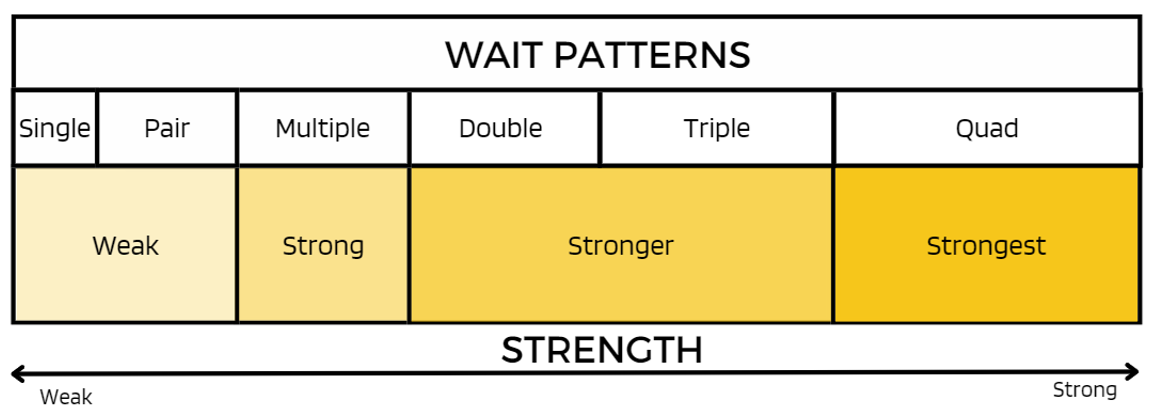
A wait pattern exists when one tile is missing to complete a hand with one or more blocks. Not all waits are created equal. Some rely on a single outcome, while others allow multiple paths to completion:
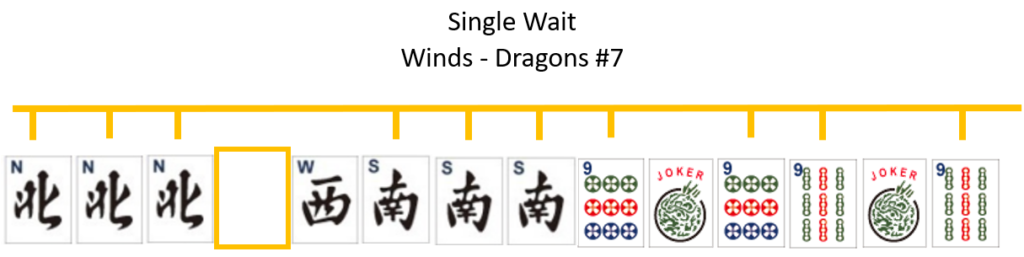
- Single wait needs one specific tile to fill a gap and complete the hand.
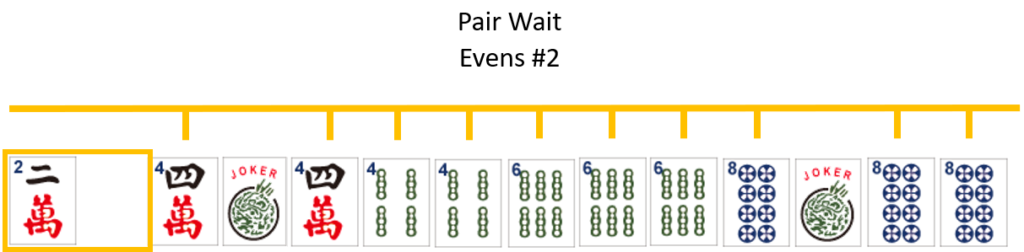
- Pair wait needs one tile to form the final pair.
- Multiple wait needs one tile or a joker that can be used in a big multiple to complete the hand.
- Double wait needs one of two tiles or a joker that can be used in a big multiple.
- Triple wait needs one of three tiles or a joker that can be used in a big multiple.
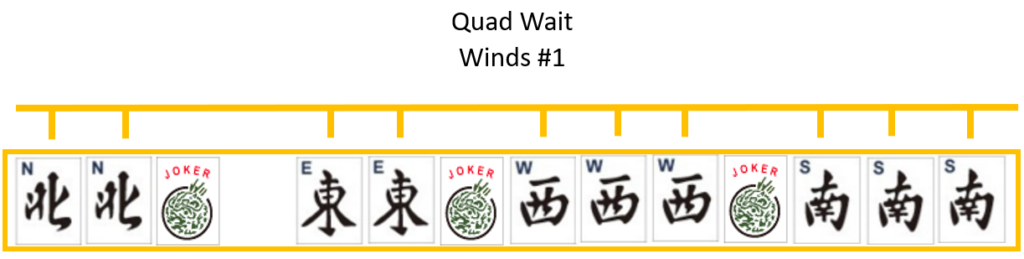
- Quad wait needs one of four tiles or a joker that can be used in a big multiple.
Whatever hand you are playing, the goal is not simply to get close—it is to improve the strength of your wait. Strong structure early in the game leads to flexible waits later, giving you more control over risk precisely when the game demands judgment rather than hope.
To determine your position, consider these variables:
- Underdog: Back or weak position in the game based on the strength of the hand, number of discards in the hand, number of discards visible, and number of picks left in the wall.
- Contender: Middle or moderate position in the game based on the strength of the hand, number of discards in the hand, number of discards visible, and number of picks left in the wall.
- Frontrunner: Front or strong position in the game based on the strength of the hand, number of discards in the hand, number of discards visible, and number of picks left in the wall.
When you are ready to win, adjust your expectations based on the strength of your wait. If your wait is strong, reassess pick by pick. If your wait is weak, fold and block.
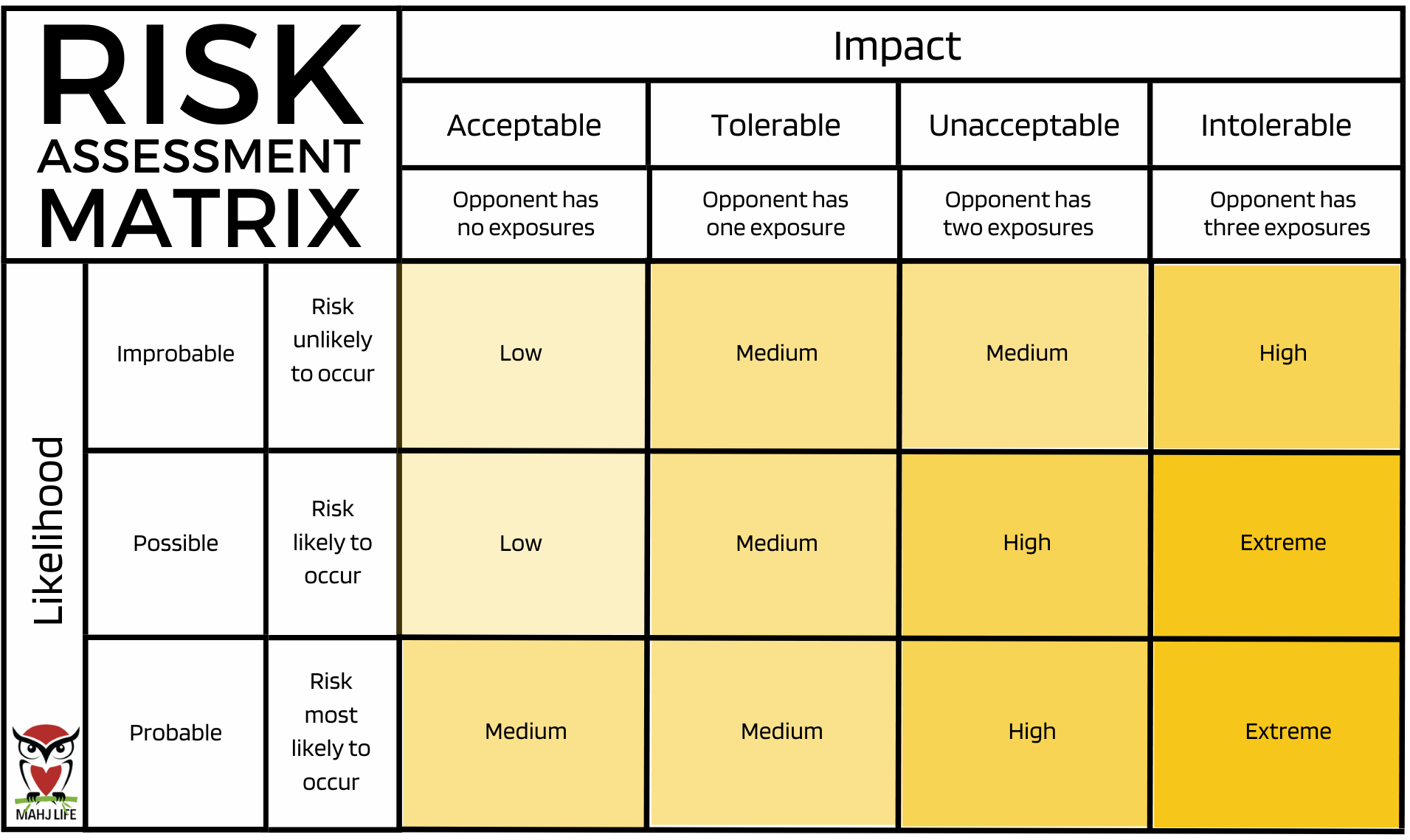
Consider your position in the game and your wait pattern as you assess the risk with each pick from the wall. Reassess if you draw a tile that could give another player a winning hand. Here is a Risk Matrix to help you with push-fold judgment.
Account for three tiles in discards or exposures and consider the availability of jokers.
| PUSH JUDGMENT | FOLD JUDGMENT | |
| If you think your winning tile is in the wall or that an opponent may discard it, push to win. Discard the riskiest tile first. | If you think the potential of getting your winning tile is slim, fold. Keep risky tiles, break up your ready or near-ready hand, and discard as safely as possible to force a draw (i.e., wall game). Do not claim discards for exposure—it gives other players valuable information. Discard tiles that have been exposed or previously discarded; it’s best to discard number tiles where 3 are out (except Year tiles). Discard jokers (jokers cannot be claimed). | |
| If you think your winning tile is in the wall or it may be discarded by an opponent, push to win. Discard the riskiest tile first. |
Wait pattern examples from the current National Mah Jongg League card:


These concepts are detailed in the American Mah Jongg Primer Volume 2, Essential Skills and Powerful Strategies You Need to Optimize Your Winning Potential